TWIN GAUGES
The race sidebar had grown the way sheds grow: a new bit bolted on whenever something needed a home. Your position showed twice (a big badge and the standings, which didn't always agree), the speedo was squashed into the bottom corner, the card timer was a thin bar nobody could name, and the stats only counted some of your upgrades. Play a card that boosts Handling and the number could sit there, unmoved.
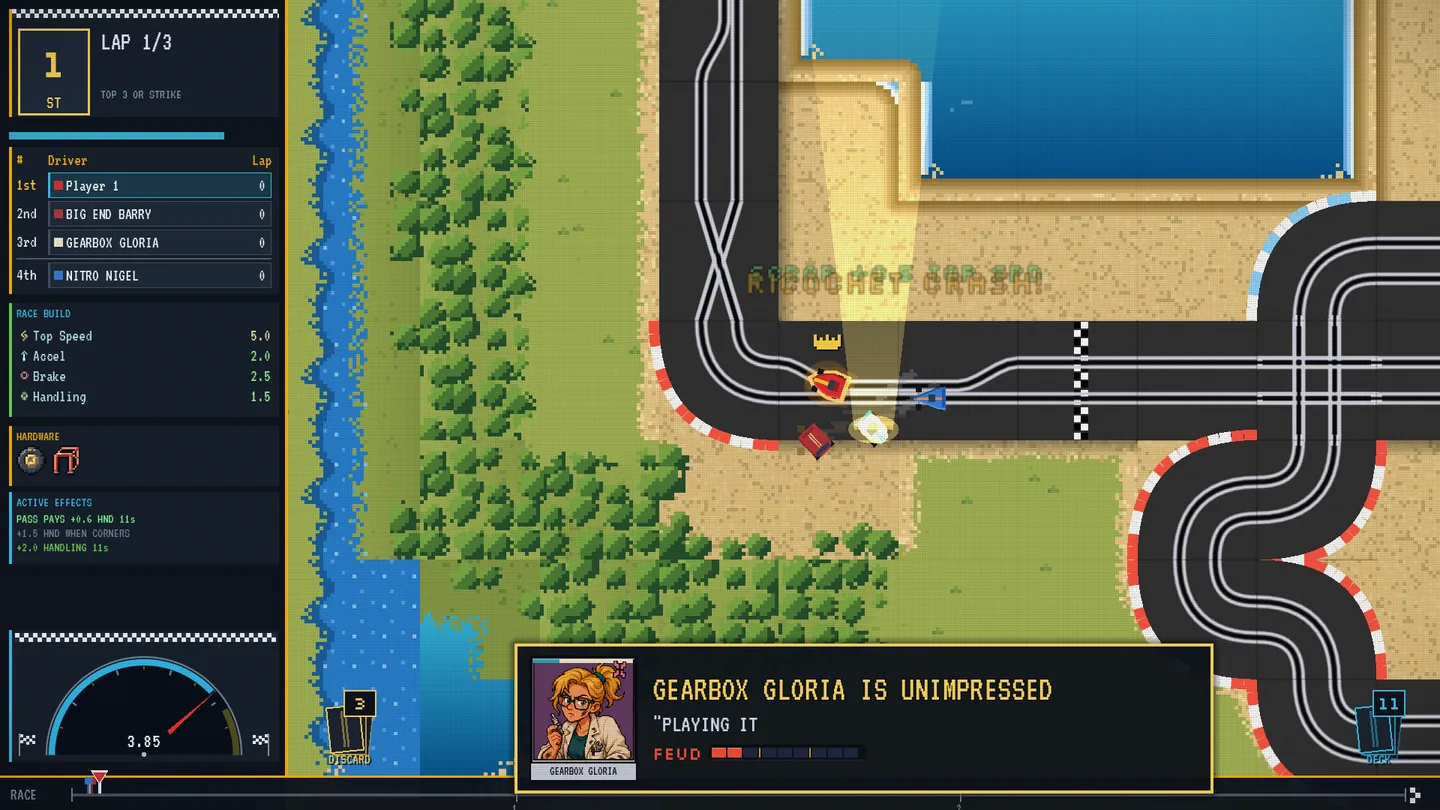
So we pulled it all out and started from the dashboard. The speedometer is now a proper round dial at the top, with a little lap gauge tucked against it like a rev counter: one segment per lap, gold for the one you're on. Your goal for the race sits beside them, and if your place right now would cost you a strike it starts flashing STRIKE ZONE.
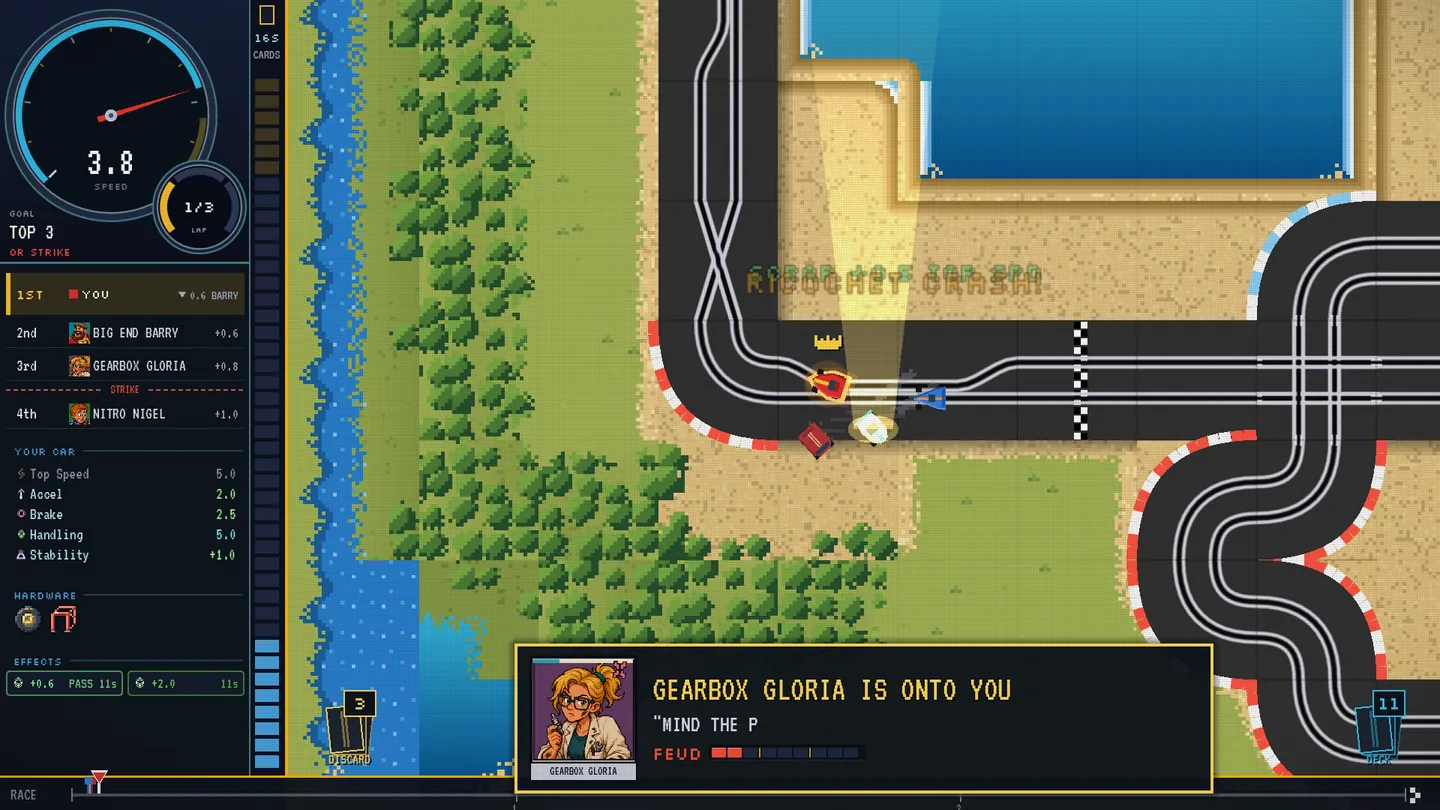
The card timer is now that tall column down the edge, and it counts up. It fills blue as you race, goes gold near the top and lights up when your cards arrive. Watching a bar drain felt like losing something; watching one fill feels like earning it.
The standings have faces now, and real timing-screen gaps: seconds behind the leader for everyone, and in your own row, how far up the road the car ahead is and how close the one behind. The red STRIKE line shows where the cut falls. Underneath, YOUR CAR gives one number per stat, Stability included, with every card and part you own already counted. Hover a stat to see where each point came from.
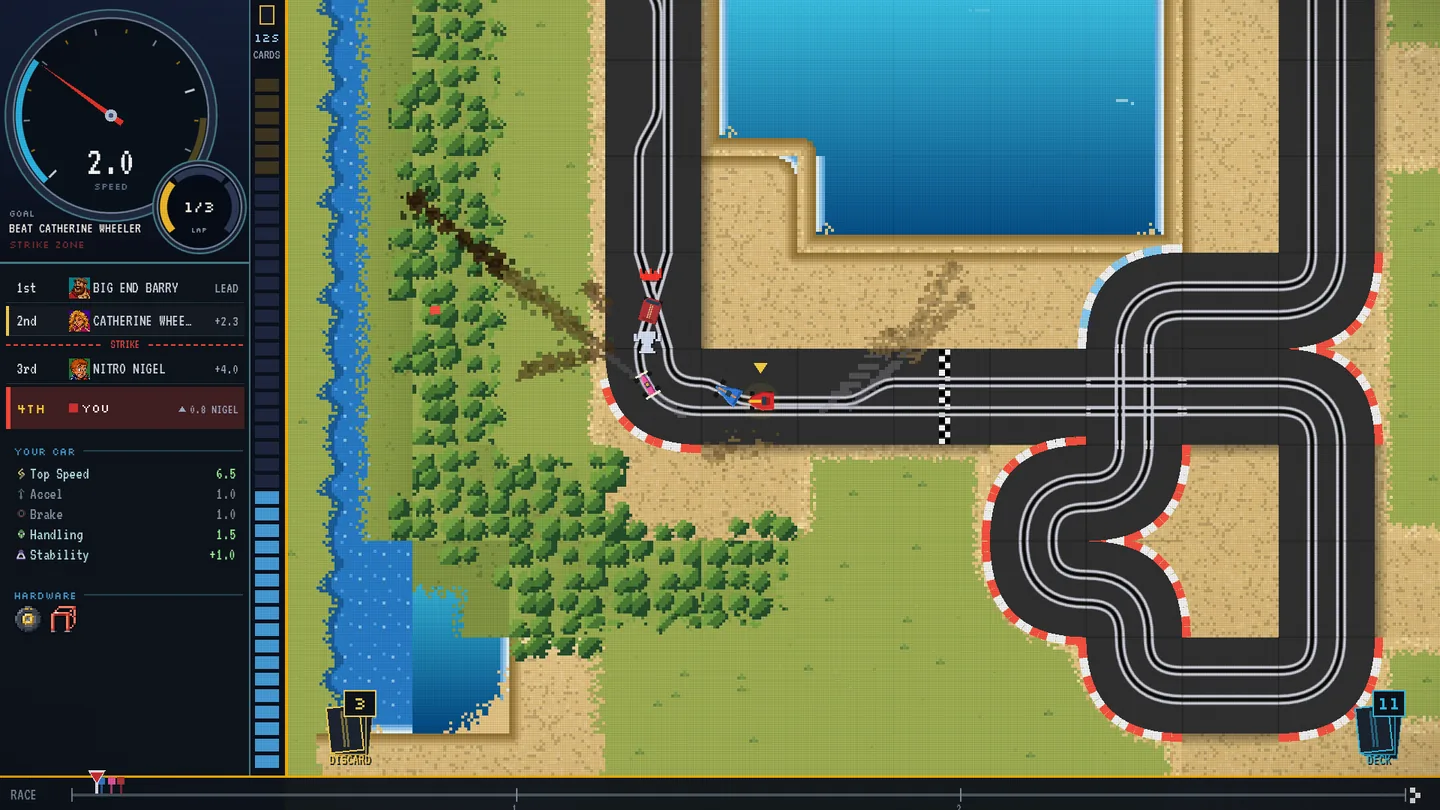
These are captures from the native Windows desktop build at 1080p. Smaller windows and phones keep the old layout for now; they're getting a design of their own next. Nothing about how races, cards or upgrades play has changed. The numbers just tell the truth now.